I love finding new ways to embrace the Rosary. I recently came across a podcast series called Daily Rosary Meditations hosted by Dr. Mike Scherschligt. The series is part podcast and part Rosary prayer. Dr. Scherschligt prays the Rosary differently than other Rosary meditations in that he doesn’t pray the Mysteries. Instead, he has a topic that he talks a little about between decades. He has covered stories about the power of the Rosary, the Church teachings on drug use, Purgatory, anxiety, and health.
Dr. Scherschligt does what I’m attempting to do with RosaryMeds — tie everything that the Church teaches and current events to the Rosary. There is nothing that happens to us that the Rosary can’t either help explain or give us the strength to endure. I’ve wanted RosaryMeds to be a treasure trove of ideas fueling Rosary prayer. It looks like Daily Rosary Meditations has done the same.
Some Rosary purists will point out that Daily Rosary Meditations is not Rosary prayer because it lacks the actual Rosary Mysteries. But I think it’s a BYOM Rosary — Bring Your Own Mysteries. There’s nothing preventing someone from listening to Dr. Scherschligt’s stories and teachings and recalling the daily Mysteries while praying the Rosary.
Unlocking the Power of the Rosary
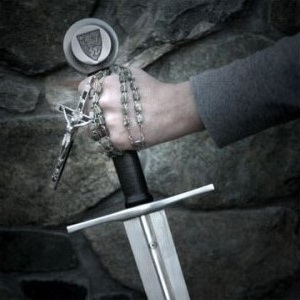
The Sept. 25 episode was particularly powerful. Titled “The Sword“, Dr. Scherschligt tells stories about many of the miraculous events that have occurred because of the Rosary. Powerful armies and dictators have been brought down and dismantled through people coming together in Rosary prayer. If you’re looking for motivation to pray the Rosary, this is a great episode to listen to.
If you have the Amen app from the Augustine Institute installed, then you already have access to Daily Rosary Meditations. You can also listen to it via any podcast app or directly through the website. When I find the time, I will see how I can link to his series from RosaryMeds. It’s that good!
The pastor of my parish asked me to give a talk about the Rosary on the celebration of Our Lady of the Rosary on Oct. 7, 2022. I focused on Mary’s promised benefits to those who pray the Rosary that she gave to Saint Dominic in a private revelation. It’s a relatively short video with no visuals so you can listen to it if you like.
Someone may ask, “but how do we know those promises are true?” And that’s a valid question. The historical accuracy of these promises is questionable. However, while the origins of these promises may be murky, I believe they are true. Nothing in these promises contradicts Church teachings and they are supported by hundreds of years of popes and saints affirming these promises. But most importantly, if you have a devotion to the Rosary, you will come to know through God speaking to you in your prayers that they are true.
Happy feast day of Our Lady of the Rosary! I’m going to keep this short and sweet. Humbly pray the Rosary without reservation. He will bless you in so many different ways.
The 15 Promises Of The Rosary According To The Virgin Mary –
The Blessed Virgin Mary made these 15 promises of the rosary to Saint Dominic and to all who follow that “Whatever you ask in the Rosary…”
Today we celebrate the many victories in our lives. We celebrate a historical victory on this day, but we also celebrate God’s victory over sin. We celebrate our small daily victories when we choose to follow God and honor Him by living according to His Will.
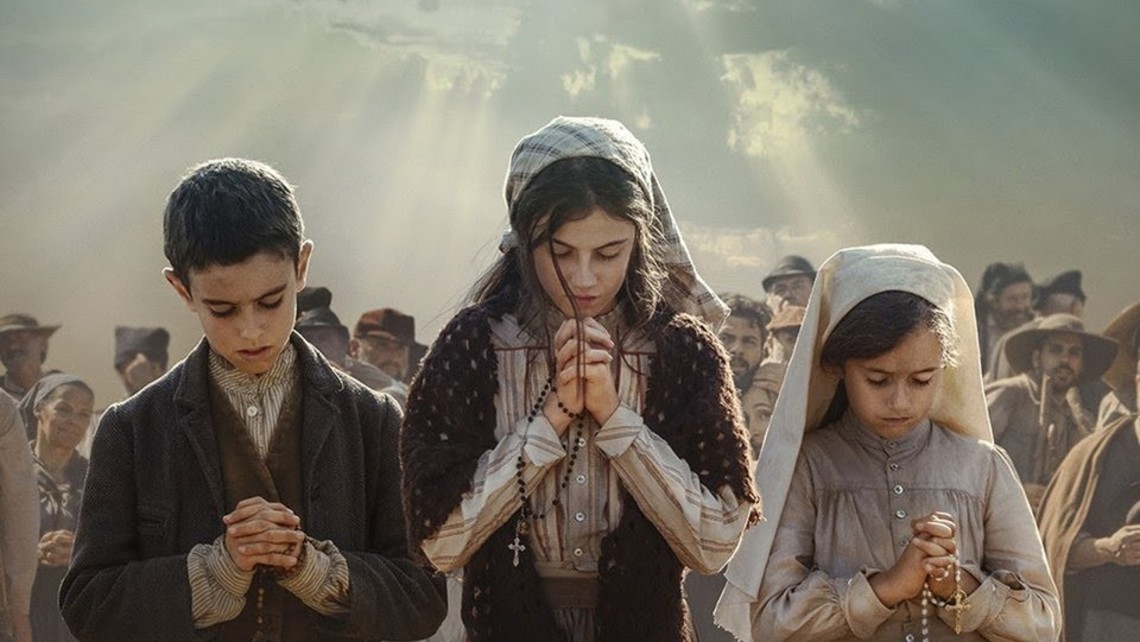
This past weekend, I watched Fatima which was released in 2020. It’s worth watching. I really enjoyed this account because it didn’t romanticize what happened at Fatima in 1916. The movie focused not so much on Mary’s messages, but on the hardship these encounters created for the children and their families. They were accused of lying and being misled by Satan, hounded by pilgrims, and interrogated by civil and religious authorities.
One of the most impactful scenes in the movie was when Mary showed Lucia a glimpse of the souls in Hell. The scene portrayed many of the classical depictions of Hell — fire, smoke, devils, and souls screaming in terror. It gave weight to Mary’s message that we all must pray for the conversion of sinners.
Our Lord warns us that we will be separated from him if not helpers in their serious needs of the poor and little ones who are his brothers. To die in mortal sin without repentance and without having to accept God’s merciful love means remaining separated from him forever by our own free choice. And it is this state of definitive self-exclusion from communion with God and the blessed, which is designated with the word ‘hell’.
Catechism of the Catholic Church
The sad fact is that there are souls in Hell permanently cut off from God. The Church teaches that all the souls in Hell deliberately rejected God’s laws and His mercy. But it really hit me recently that this is a tragedy not only for the individual rejecting God but also for the universal church for letting people get to that point.
Looking back at the Old Testament, we have a duty to help correct and convert those living in sin. It’s not out of self-righteousness or judgment that we do this, but out of a genuine concern for everyone’s eternal well-being. No matter how you personally feel about someone, we need to remember they are our brother or sister in Christ. And by not helping them, we run the risk of sin through our silence.
18 When I say to a wicked person, ‘You will surely die,’ and you do not warn them or speak out to dissuade them from their evil ways in order to save their life, that wicked person will die for[a] their sin, and I will hold you accountable for their blood.19 But if you do warn the wicked person and they do not turn from their wickedness or from their evil ways, they will die for their sin; but you will have saved yourself.
Ezekiel 3:18-19
Maybe it’s because I’ve been steeped in little league baseball for the last two months, but I’ve come to see our faith as a team sport. We succeed and fail as a community. Yes, our faith has an individual and personal aspect to it. We have to do our part in fostering a personal relationship with God. But we are also a community meant to support each other. A person doesn’t fall into mortal sin in a vacuum. I think too many times we turn a blind eye to the mortal sin we witness by taking an “it’s not me” attitude about it. That’s a failure of the community. When we’re not supporting each other, the entire Catholic Church is weaker as a result.
Conversion through the Rosary
Think of the last line of the Hail Mary, “pray for us sinners, now and at the hour of our death.” In a standard Rosary, you will say those words 53 times. The Hail Mary is a short prayer in terms of words (only 42) so the fact that it specifically mentions praying for sinners is significant. It’s that important to Mary, and it should be important to us as well, that we pray for those committing sins (ourselves included).
I know that I often pray the Fatima prayer too casually when I pray the Rosary. But we must remember that sin has real eternal consequences. And we must pray for those who live in sin because their souls are in danger. I understand, we don’t like to think about Hell or the idea that there are people that choose it. Or maybe the problem seems too big for us to solve. But that’s why we pray — to receive help from those in Heaven and on earth. We can ask Jesus for mercy on sinners, Mary to advocate for them, and the Holy Spirit to convert and guide them. We are never alone in this fight. The conversion of sinners is something the entire Church undertakes together.
O My Jesus, forgive us our sins, save us from the fires of Hell and lead all souls to Heaven, especially those who are in most need of Thy mercy.
I may have painted a rather bleak picture in my last few articles about chastisements and politics. After all, what child wants to get into trouble, and what adult wants to be chastised? But the struggle, hardship, and challenges are part of being human and no one is immune to them. Thankfully, we don’t face them alone and have great protection if we take the right steps to accept them. I, of course, am talking about receiving Mary’s protection by praying the Rosary.
When the family (or culture) is attacked, you and I do not fight alone: we are accompanied by the best of soldiers—Jesus Christ, the Blessed Mother, the choirs of angels, and the saints. The challenge is to allow them into our battles, obey their strategies, and follow their lead. In combat, they guide us to know when to move defensively or offensively.
Kathleen Beckman
In her article on Catholic Exchange, Kathleen Beckman talks about how we don’t face challenges alone, whether they be temptations from Satan or chastisements from God. We always have Mary’s protection. Like a commander on the battlefield, she leads us into battle against Satan. Battles are unpleasant, but that’s exactly what we’re engaged in by the fact that we have souls that both Satan and God desire to claim.
The Blessed Mother is perfectly attuned to the spiritual and temporal needs of families. Our gentle and fierce Mother, moved by the weight of divine love, blesses the domestic church with an abundance of grace. Always aware of the exalted role of the family, and knowing the manifold ways that Satan attacks it, Mother Mary watches over us. The Immaculate Heart is compelled to act in holy boldness on our behalf. Adorned with heaven’s endowment, the Virgin Mary is the most powerful warrior in the Lord’s entire army. Never doubt that God has anointed Our Holy Mother for spiritual combat and victory.
Kathleen Beckman
This is why praying the Rosary is so important. We can’t hide from Satan. We don’t stand a chance standing up against Satan alone. We can’t “sit this one out” and not participate. We are all in this battle whether we like it or not. If we have no choice but to fight, we might as well put on our best armor and go to war with a great army.
By praying the Rosary, we call upon Jesus, Mary, saints, and angels to protect us. In fact, one of Mary’s 15 promises uses a war metaphor comparing the Rosary to armor:
The rosary shall be a powerful armor against hell, it will destroy vice, decrease sin, and defeat heresies.
Mary’s 3rd promise to those who pray the Rosary
We have to pray the Rosary regularly so that we are always prepared to do battle. Preparation is the best protection. While the Rosary is a powerful prayer on its own, its power increases greatly as you build upon it day after day. Like exercise, the first pushup doesn’t transform your body. It’s somewhere between the first and 10,000th pushup that changes you. Similarly, it’s somewhere in the thousands of Rosary prayers that make you strong enough to destroy vice, decrease sin, and defeat heresies.
When we pray the Rosary, here’s how Mary helps us defeat evil spirits. Take it to heart and explicitly ask for Mary’s intervention the next time you pray the Rosary.
Mary is the vessel — the mediatrix — of God’s grace. God anointed her for spiritual warfare as the most powerful threat to Satan because of her extraordinary union with Jesus.
Because God chose the Virgin Mary to be the New Eve against demons, the name of Mary has a similar impact to the name of Jesus. This is seen during exorcisms. Demons are terrified of the Virgin Mary who always champions a person’s liberation from evil.
Mary’s holy, maternal presence is extraordinarily painful to demons. They know the efficacy of Marian intervention. The Incarnation — the undoing of the devil — was fulfilled in Mary.
Mary’s virtues and union with the Holy Spirit make her a fierce destroyer of diabolical plots and tactics. Her life-giving love and defense of God’s family are infuriating to prideful demons.
I woke up last Friday and my email inbox was soaked in Black Friday deals. Every company I’ve done any business with was offering me some limited time, deep discount on their products and services. For me, when everyone is sending me emails on their sales at the same time, I tend to ignore or bulk delete all of them. I just don’t want to spend my limited time and money acquiring stuff that will just sit unused or not bring me much peace and happiness a few months from now.
I’m not offering any type of Black Friday, Cyber Monday, local business Tuesday, giving Wednesday, or large tipping Thursday deals on RosaryMeds. The Rosary doesn’t need it. The Rosary is free to all and provides more value than that new TV on sale.
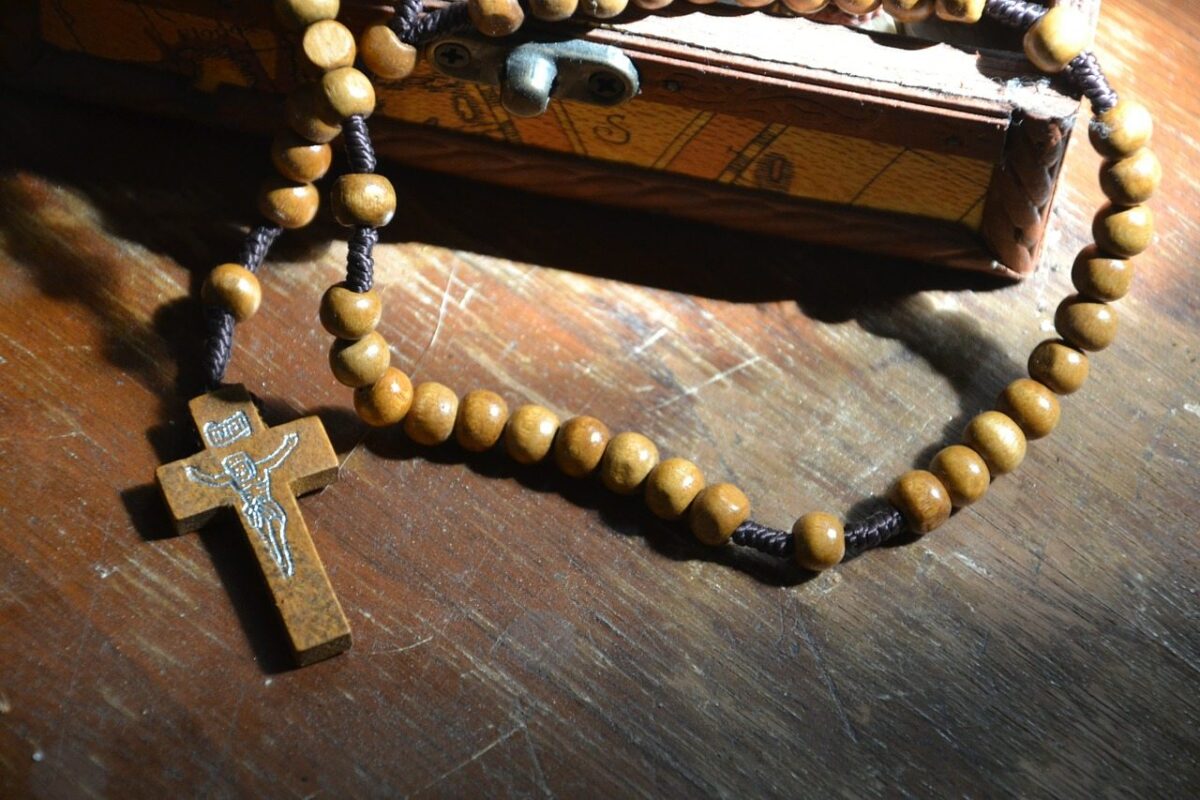
You don’t need a fancy, gemstone-laden rosary to start praying. I use a cheap plastic one. Initially, people prayed the psalms, a precursor to the Rosary, using pebbles. If you don’t have a rosary, just find any 10-item set of things to count — straws, Lego pieces, coins, etc. When all else fails, you always have your fingers or just use your memory. If you absolutely need a rosary, there are countless free apps you can use (The Holy Rosary – Apps on Google Play) or you can use the Rosary resources on this website.
The full benefits you get out of the Rosary are immeasurable. Why? Because the fullness of God’s grace is infinite and beyond our human comprehension. The joy of Heaven is something we can’t even imagine. But we do have an idea of some of the benefits of the Rosary. Just look at the 15 promises Mary made to those who faithfully prayed the Rosary. As I presented a few years back, these promises are more valuable than winning millions of dollars.
I know for many of us, this Advent will be different and challenging with Covid-19 restrictions and economic uncertainty. But the one thing that you can be certain about is the power of the Rosary and Mary, our Mediatrix. With store-bought gifts, it’s a 50/50 chance whether it will be some useful or something that gets returned or abandoned in a closet. But the Rosary is a gift that rewards everyone who prays it. This Advent, give yourself and your loved ones (heck, even your enemies) the gift of Rosary Prayer.
Yeah! October is finally here. Besides the prospect of Holloween candy at the end of the month (Reese’s Peanut Butter Cups!), October is the month of the Rosary.
I’ve been on a bit of a Fatima kick lately. I’ve listened to an audiobook on it as well as watching a children’s series on Formed.org. And I’m going to watch the recently-released Fatima movie. What all of these accounts have in common is the focus on the Rosary.
When Mary appeared to the children at Fatima, she told them to pray the Rosary every day. Think about the weight of this request. This is coming from the mouth of the Queen of Heaven. Mary is the Mother of God. When she asks us to do something, it’s important and we better do what our Heavenly Mother tells us.
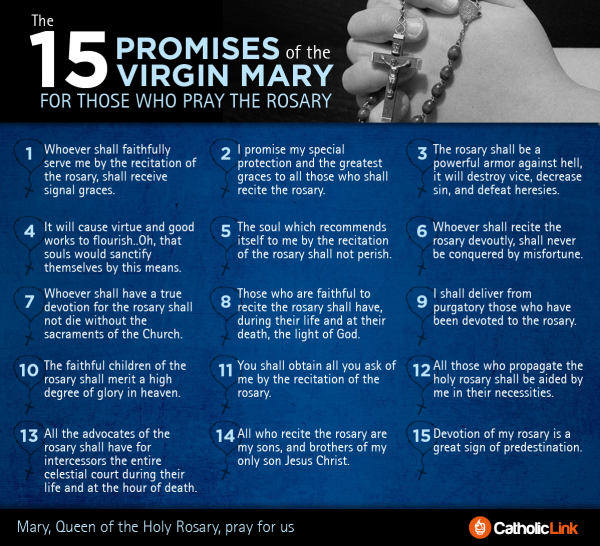
This October, pray the Rosary every day. It’s what Mary wants from us so that we can keep Jesus close to our hearts. I’ve collected Rosary resources from across the web on this website that can help you keep the Rosary fresh and engaging. If you need more of a reason than our Heavenly Mother requesting that you pray the Rosary, also consider the many benefits of praying the Rosary:
Whoever shall faithfully serve me by the recitation of the Rosary, shall receive signal graces.
I promise my special protection and the greatest graces to all those who shall recite the Rosary.
The Rosary shall be a powerful armor against hell, it will destroy vice, decrease sin, and defeat heresies.
The Rosary will cause virtue and good works to flourish; it will obtain for souls the abundant mercy of God; it will withdraw the hearts of men from the love of the world and its vanities, and will lift them to the desire for eternal things. Oh, that souls would sanctify themselves by this means.
The soul which recommends itself to me by the recitation of the Rosary, shall not perish.
Whoever shall recite the Rosary devoutly, applying himself to the consideration of its sacred mysteries shall never be conquered by misfortune. God will not chastise him in His justice, he shall not perish by an unprovided death; if he be just he shall remain in the grace of God, and become worthy of eternal life.
Whoever shall have a true devotion for the Rosary shall not die without the sacraments of the Church.
Those who are faithful to recite the Rosary shall have during their life and at their death the light of God and the plentitude of His graces; at the moment of death, they shall participate in the merits of the saints in paradise.
I shall deliver from Purgatory those who have been devoted to the Rosary.
The faithful children of the Rosary shall merit a high degree of glory in Heaven.
You shall obtain all you ask of me by the recitation of the Rosary.
All those who propagate the Holy Rosary shall be aided by me in their necessities.
I have obtained from my Divine Son that all the advocates of the Rosary shall have for intercessors the entire celestial court during their life and at the hour of death.
All who recite the Rosary are my sons and daughters, and brothers and sisters of my only Son Jesus Christ.
The devotion of my Rosary is a great sign of predestination.
As much as I would like life to go back to normal, we are still far off from returning to any form of normalcy. Many of us have seen drastic changes to our educational, social, professional, and family lives throughout 2020. It will take time for society to return to 2019 norms. And while this may not have made headlines, the largest disruption of 2020 for many of us was to our prayer lives.
There is a lot of depressing news out there. Of course, COVID 19 is the leading headline. But there are also racial, political, economic, societal, and climate concerns. Personally, because of poor air quality due to fires in my area, I haven’t been able to go outside for any meaningful length of time. That has taken a toll on my mental state. These headlines can become all-consuming because they are the only view into the world many of us have if we’re sheltering in place.
I think the reason news headlines affect our moods more than ever is that practicing our faith has become disrupted. Many of us can’t go to Mass or receive the sacraments. We start to digest all this news with a lack of spiritual perspective that usually comes through prayer. It’s God who helps us face this often cruel and challenging world with words of hope. He tells us through prayer that everything will be okay if we put faith in His divine plan. When we don’t see things through this spiritual lens, everything starts to look more hopeless and pointless.
I’m not proud of this, but my Rosary prayer hasn’t been very consistent in the last few months. I took a summer vacation from praying. My summer wasn’t great; it was a large slog of work and parenting. We didn’t have any exciting vacations and my kids didn’t have their usual camps. My anxieties were only amplified by the lack of daily prayer. I dwelled on things that I would normally shake off as no big deal. Because I wasn’t grounded in prayer, my wellbeing was at the mercy of the latest headline.
Starting last week, I rebooted my Rosary prayer routine. Now that my kids are back in school (remotely), I’ve arranged my schedule so that there is time in the morning to pray the Rosary. I integrate light exercise and stretches between decades followed with a cup of fresh coffee to wake me up. I start the day in a much better state when I’ve had some exercise, coffee, and the Rosary.
I had a choice. I could either lament the state of the world or I could change my routine. I chose the latter and that has made a difference. Of course, my day is still challenging. But I’m slowly finding that physical, mental, and spiritual energy to face those challenges. Restarting Rosary prayer hasn’t been a silver bullet, but it helps. And from the “silver linings” department, because of COVID, my parish has started live streaming all Masses, including daily ones. I’ve started participating in those daily online Masses increasing my spiritual reserves for the day.
As we approach October, the month of the Rosary, I suggest changing your routine to include the Rosary if you aren’t already praying it daily. It might make all the difference for you and those around you to include Mary and her son, Jesus Christ, in your day. Like a trusted friend, lay forth all your anxieties at Mary’s feet and ask for her intercession. You will be amazed at what she will do if you approach her humbly asking for help.
Naturally, in this month of May, we should turn our attention towards Rosary prayer. In our current situation, Rosary prayer takes on an even more important role. While skeptics will balk at what I’m about to say, our Rosary prayers and intentions are as essential as masks, ventilators, disinfectant, and a revived economy. Much like how all the masks and ventilators are keeping people alive and safe physically, our prayers are keeping us safe and strong spiritually. And what good is physical health without spiritual strength? We need both.
I’ve linked prayers that Pope Francis has asked us to pray at the end of every Rosary. Mary has always been a powerful intercessor throughout the ages. She loves to bring us closer to her Son, Jesus Christ. And what better way to show that love than bringing peace and comfort in times of distress.
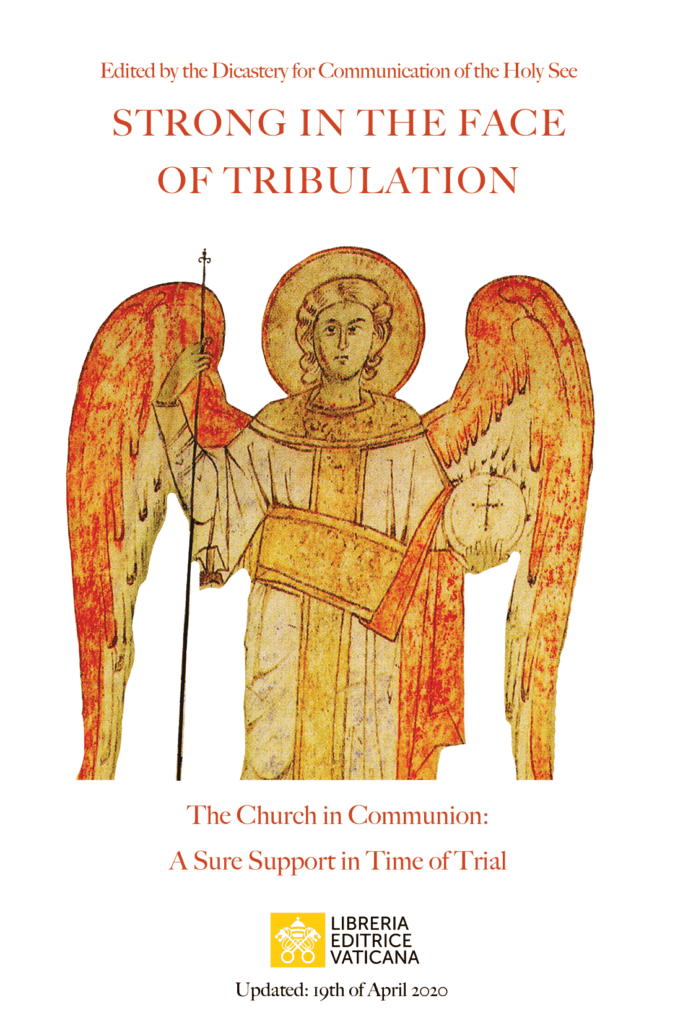
The Vatican published a free ebook with prayers and homilies for difficult times. Naturally, anything papal isn’t going to be a light read. But please try reading a few pages every day this month in conjunction with the Rosary and additional prayers. Because a world united in prayer can’t be miserable and hopeless no matter what virus or situation we find ourselves in. The world has always been a tough place but the one constant through the ages is people finding peace and ultimately joy through God’s grace.
A while ago I wrote a 15-part series about Mary’s promises to those who pray the Rosary. Those promises alone should be reason enough to pray the Rosary with unceasing regularity. But I came across this article on the National Catholic Register laying out 10 reasons why the Rosary is so powerful. They are reasons not often mentioned when talking about the benefits of Rosary prayer.
You should read the entire article. It’s a light read; short and to the point. But for the TL;DR crowd, 10 additional reasons to pray the Rosary are:
It Engages Your Will
It is Physical
It Engages our Linguistic Functions
It Involves Our Imagination
The Rosary Occupies the Language Facility
The Sub-Linguistic is Accessed
The Healing Mysteries are Applied
Spiritual Warfare is Engaged
The Battle Against Evil in the Word in Opened
It is Accessible and Easy for All
Like I said in my book, The Rosary Prayer Guide for the Rest of Us, the Rosary has many facets that, when combined, make it exponentially more powerful than each aspect alone. The NCR article touches on that same idea. The Rosary combines physical, conscious, subconscious, and imaginative elements making it a rich prayer. Each of those elements is good on its own, but each one is incomplete. For example, what good is engaging your linguistic functions if your mind is occupied on something else? You’re just mindlessly reciting. But when combined, you are fully engaged with God’s miraculous power.
Engaging all these aspects of Rosary prayer also fills every aspect of our being with God’s grace. And if you’re filled with God’s grace, you don’t leave any room for Satan to infiltrate your soul. Satan will try to infect your mind, but that’s occupied. He’ll try to infiltrate your imagination, but that’s will also be busy. Someone committed to deep, meditative Rosary prayer doesn’t leave room for temptation. You become a spiritual fortress Satan cannot conquer.
The Rosary is a hard prayer to master. I’ve been praying it for years and yet I still often struggle to find the motivation to pray it and the will to focus. I know all the benefits and yet, Satan’s pull to drive me away from the Rosary is still there. Satan doesn’t give up easily. But it’s the fact that the Rosary requires so much engagement that makes it so effective. Like how a full-body workout is exhausting but beneficial, a full body-and-soul Rosary prayer is also exhausting. But you stand to lose so much by not investing in this spiritual exercise. And you gain so much more than what you put in if you stick with it. So please, in this season of Easter, invest in your spiritual well being and pick up those beads!